The material in this section is intended to serve as a practical
guide for preparing your own menus using the principles of alchemy.
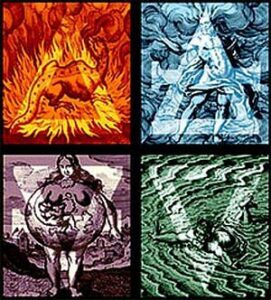
For the alchemical cook, the ideal meal is a balanced blend
of universal forces, each contributing its own unique signature
to the menu. Alchemists referred to these basic archetypal forces
as the Four Elements of creation, and they named them Earth,
Water, Air, and Fire. Manipulating and balancing these hidden
properties is what alchemy is all about. The Great Work of the
alchemists was to rebalance the chaotic forces of nature expressed
in base matter and gradually transform them into perfectly balanced
and incorruptible substances. That purification process consists
of removing excess elements and adding missing elements, but
what makes alchemy so powerful is that it works simultaneously
on all three levels of reality: the physical, the psychological,
and the spiritual.
So in planning a meal, the higher cook must consider not only the hidden properties of the physical foodstuffs but also the bodily, mental, and spiritual makeup of the persons who are going to eat the food. In the simplest case, for instance, angry or hyper individuals might be fed a diet high in Water Element foods to calm them down, but lethargic or depressed persons should eat Fire Element foods to energize them. Worldly persons should eat mostly of Air Element foods to spiritize them, while an intellectual or overly religious person should eat a diet
of Earth Element foods to ground them. The goal is not to neutralize the powers of the personality but to integrate those forces into a resilient and whole individual. While there are endless combinations of the elements, the principles of balancing them are relatively simple and straightforward. The art of alchemy comes in recognizing the hidden signatures of things, situations, and people and applying that knowledge in a totally honest and dedicated way to transform them.
Therefore, the alchemical cook is much more than just a preparer
of food. Whether cooking for oneself or for others, the alchemist
must be an intuitive and insightful physiologist, psychologist,
and spiritualist all rolled into one. Keep these principles
in mind when preparing meals from the following lists of foodstuffs.
There are four groups here, each representing one of the four
archetypal elements: Earth, Water, Air, and Fire. The degree
of each element present in the food is denoted by up to three
plus (+) signs. Using these esoteric attributes of foods, it
should be relatively easy to prepare creative, tasty, and alchemically
active meals.

Alfalfa is associated with earthly providence because its roots
penetrate so deep into the dirt. Adding fresh alfalfa sprouts
to a meal is thought to ground etheric energies and increase
the physical sustenance of foods. Alfalfa tea is a stress-reducing
infusion that works by calming nerve endings to relieve the
pain of arthritis and neuralgia. [Earth ++]
Allspice is made from a plant native to tropical America and got its name because its aroma and flavor resemble a combination of various cooking herbs. Considered a lucky spice, it is said to promote health in an individual and prosperity in a family. Allspice is burned as incense to attract money. [Fire +]
Almonds are sacred to the gods Thoth, Hermes, and Mercury and are said
to bring wisdom and prosperity by stimulating intuition and
insight through the Third Eye Chakra. Magical wands are often
made of almond wood. [Earth ++]
Amaranth is an ancient Aztec grain with a strong nutty flavor. The tiny
grains add a peppery taste that enhances other grain dishes.
The Aztecs considered the spicy grain a powerful source of earth
energy. [Earth +++]
Anise calms and soothes the body and mind. Anise seeds contain a form
of plant estrogen, and the aromatic tea made from them deepens
meditation. [Air ++]
Apple, known as the Fruit of the Gods, is a very powerful source of
spiritual energy that encourages balance and harmony. The Wiccan
Feast of Apples is celebrated on Samhain (Halloween), and in
ancient Greece and Rome, apples were eaten at Diana’s
Festival (August 13). If cut horizontally, the apple reveals
the pentagram pattern, which is considered the gateway to occult
powers as well as symbol of the quintessence. The Egyptians
offered apples to their highest and most powerful priests, whom
they considered guardians of hidden knowledge. In the Middle
Ages, sliced apples were used to foretell the future and eating
them regularly was said to enable a person to live over 200
years. Modern clinical studies have proved that eating apples
reduces cancer risk. [Air +++]
Apricots have been grown on the mountainous slopes of China for over
5,000 years, though the fruit is much more difficult to grow
in temperate regions. Apricots carry feminine spiritual energy
and are used to sweeten someone’s disposition or instill
romance and passion in a relationship. Extremely rich in vitamins
and minerals, apricots strengthen the immune system and have
more of the antioxidant carotene than any other fruit. [Air
++]
Artichoke is the large flower bud of a wild thistle plant. Artichoke encourages
personal growth and protects a person from negative elemental
energies. Artichoke bottoms were once thought to have such a
sexually stimulating effect that young women were warned against
eating them, else they give in to temptation. [Air +]
Asparagus was one of the few vegetables introduced into the New World
by colonists from Europe, where its use dated back to the days
of the Roman Empire. The phallic-shaped plant has always had
a reputation as a potent aphrodisiac, which was one of the primary
reasons people ate it. The strong odor produced in the urine
after asparagus is eaten betrayed many unfaithful husbands who
believed in the vegetable’s licentious powers. In the
Victorian era, mothers made a point of teaching their daughters
how to recognize its distinctive smell. Asparagus is also a
diuretic and eases stomach and intestinal disorders. [Water
+]
Avocado is thought to promote physical beauty, and avocado oil is used
in cosmetics to this day. The Aztecs ate the lush fruit to become
passionate and aroused lovers. [Water ++]

Baking soda or baking powder adds expansive, raising energy,
though when used without the proper grounding, the cooking ally
can result in disappointed expectations. [Air ++]
Bamboo shoots are sacred to the Polynesian moon goddess Hina
and add a feminizing influence to the consistency and flavors
of food. [Water ++]
Bananas carry contradictory meanings. Because banana trees promulgate
through ground shoots and not by fertilization, their flowers
(the banana bunches) are sterile, and each tree dies as soon
as it bears fruit. For that reason, bananas represent the futility
of material possessions, and Buddha is often shown meditating
under a banana tree. On the other hand, the banana’s phallic
shape represents male heroic energy, and men in Pacific Island
nations eat them to become sexually charged. At one time in
Hawaii, women were forbidden to eat the male fruit on pain of
death. [Air +]
Barley is the oldest of the Seven Sacred Grains of mankind and was
cultivated in Jordan around 10,000 BC. The grain was sacred
to various gods throughout India, Greece, Scandinavia, and the
Middle East. Esoterically, barley is a gentle, nurturing force
that stimulates the Heart Chakra and is used to ease a person’s
emotional burden by turning harsh feelings into love and warding
off any negativity that originates from other people. Barley
grass juice is considered an effective psychological grounding
agent and physical energizer. [Earth +++]
Basil was sacred to the Greeks, and women were not allowed to pick
it. The herb soothes anger and hard feelings by encouraging
feelings of love and is thought to simultaneously simulate the
Heart and Sacral Chakras, thereby harmonizing stressful emotions
while releasing sexual energies. Basil adds an outdoorsy, mint-like
flavor to dishes, and is best used raw. It also strengthens
the immune system and is known to kill germs. [Fire +]
Bay Leaves are sacred to the Hindu creator god, Vishnu. They were
known as laurel leaves to the Greeks and were believed to increase
psychic powers. Priestesses of Apollo chewed the leaves and
inhaled their smoke to induce a psychic state of mind. Five
leaves to a teapot make an infusion that alleviates indigestion
and clears the sinuses. [Fire +++]
Beans were thought to contain the souls of the dead in ancient Egypt
and Greece, and it was taboo to eat them or crush the plants.
According to legend, Pythagoras met his death when he refused
to escape his assassins by cutting through a bean field. Because
they contain the wisdom of ancestors, beans promote correct
decision making and are used in the divination of future events.
In modern times, however, beans have become a staple of the
human diet. Soybeans are considered the most perfect of all
beans and are sacred in Japan. Soy milk is made by soaking whole
soybeans in water; miso is a fermented soybean paste used to
make sauces and broths; tofu is a protein-rich coagulation of
soybean extract. Lentils are disk-shaped beans from India. Aduki
beans from Japan are one of the most digestible varieties, as
are the tiny but flavor-rich mung beans. Kidney, navy, black,
and pinto beans are staples of the typical Western diet. Peas
are a type of sweet bean that bring luck in love and finance.
According to folklore, shelling peas by hand will bring profits
to your business, and if an unmarried woman finds a pod containing
exactly nine peas and hangs it over her door, the next eligible
man to walk in will become her husband. [Air +++]
Beef was sacred to the Egyptian mother goddesses Hathor and Isis
and was thought to excite those who ate it, causing them to
enter blissful states. It has even been suggested that the Catholic
Church encouraged the eating of Water Element meat like fish
to foster calm docility and counter what they perceived as the
inherently aggressive and excitable qualities of red meat. [Fire
+++]
Beer is an ancient grain beverage first made from the fermentation
of partially germinated barley in water. Both the Babylonians
and the Egyptians became skilled brewers, and the oldest known
recipes are for making beer. Malt is the name given to the germinated
grain, and hops are flowers that give beer its bitter aftertaste.
Esoterically, beer is the union of Earth and Water and carries
traits of both elements. On Samhain (Halloween), Celtic warriors
fought contests over who could drink the most beer, thinking
the contest would make them immortal. Ale was considered sacred
to the Scottish god Shoney and was the first mass-produced beer.
It is made by the rapid fermentation of malt at high temperature.
[Water +++]
Beets incorporate higher passions into physical matter and stand for
the love of beauty. The red roots were sacred to the Greek goddess
of love, Aphrodite. Beets stimulate the Heart Chakra and beet
juice is used to write the name of the desired person in love
magic. Beet greens are very high in vitamin C and can be used
in salads. [Earth +++]
Blackberries or brambleberries, currants, and raspberries promote wealth
and protect from evil. The protective thorniness of their deep-rooted
bushes is the plant’s alchemical signature. Blackberry
pies are baked for the Wiccan celebration of Lughnasadh (August
2) to protect crops and encourage a bountiful harvest, and blackberry
tea is said to protect the stomach from disease. Raspberries
alleviate watery complaints such as diarrhea and painful menstruation.
[Earth +++]
Blueberries embody the esoteric principles of calm acceptance, peace, and
a protected environment. For centuries, witches have eaten blueberry
tarts when under psychic attack to protect themselves. [Earth
++]
Brazil Nuts bring good fortune to love affairs and are sometimes carried
as lucky talismans. [Earth ++]
Bread is sacred to the Egyptian mother goddess, Isis. Egyptians were
accomplished bakers over 6,000 years ago, and the word “pyramid”
is derived from the Greek word for the pyramidal stack of bread
molds placed in Egyptian ovens. In esoteric terms, bread is
a sacred carrier of earth energy that assumes the characteristics
of the grains, nuts, and herbs used to bake it. While bread
is considered the staff of life, it is considered bad luck to
position a loaf upright because that invites the powers of the
underworld to surface. The first yeast probably came from unused
bread dough that fermented. Unleavened bread is free of yeast
and is therefore considered purer than normal bread and more
suited for ritual use. Pita bread and crackers are just two
examples of the wide variety of unleavened breads. Whole grain
breads contain the amino acid tryptophan, which boost levels
of mood-elevating and soothing brain chemical serotonin. [Earth
+++]
Broccoli is a type of cabbage grown for its flower heads. It is sacred
to the god Jupiter, and the Romans believed it increased physical
strength and leadership qualities. A chemical in the vegetable
is known to retard cancerous growths in the body. [Water ++]
Brussels Sprouts are a type of cabbage cultivated since the 1600s for
their ball-shaped buds. The vegetable is said to encourage the
qualities of stability and endurance. [Water ++]
Buckwheat is not wheat but another grain more similar to rice. The mellow
tasting food represents wealth and protection of property. Witches
formed circles of buckwheat flour to create a protected space
in which to perform their rituals. Thus buckwheat has always
been associated with property rights of one kind or another.
Kasha is roasted buckwheat; groats are the split raw kernels.
Buckwheat tea has been shown to reduce swelling and edema. [Earth
+++]
Butter is the churned cream of milk and was part of the Mesopotamian
diet around 3500 BC. The ancients considered it a miraculous
and sacred food, because it was a solidification of the nurturing
properties of milk. Butter adds tenacity to all types of food
and is used to soothe troubled relationships. [Water ++]

Cabbage is one of the oldest vegetables known to man, and the
alchemists considered it the First Matter of foods. Today, there
are over 400 varieties growing all over the world. Green or
red “head” cabbage is popular in the West, while the
broad-leafed varieties are popular in Asia. Esoterically, cabbage
has a strong lunar presence and allows one to tap into existing
bodily energies by stimulating the Base Chakra. In fact, several
Greek philosophers claimed to live to a very advanced age by
eating only cabbages. In Medieval Europe, good neighbors brought
newlyweds some cabbage soup on the first morning after they
were married, and cabbage was the first thing planted in their
gardens to insure that their love took root. The fertilizing
powers of cabbage were considered so powerful in France, that
a whole folklore grew up around rumors of spontaneous “cabbage
patch babies” that appeared from nowhere. [Water ++]
Cake is a type of bread made with flour, eggs, butter, and sugar. Cakes are thought to be easily enchanted and can convey both positive and negative psychic energy. Because they carry spells, cakes became associated with rites of passage such as christening, birthdays, and weddings. [Earth ++]
Capers are the tiny flower buds of the caper bush that have been pickled.
The spice has been used as a flavoring for hundreds of years,
though its popularity is due in part to the belief that capers
promote lustful feelings and can cure impotency in men. [Fire
++]
Caraway seeds are used for protection and to dispel negative influences.
The seeds are thought to attract loving, protective energies
and discourage theft. In Europe, sachets of caraway seeds were
placed in children’s beds to protect them from harm. [Air
++]
Cardamom, also known as amomum, is a zesty flavoring made from the seeds of an Asian plant. The spice eases upset stomachs, and it is
often added as a flavoring to coffee or cocoa. Because of its
superb aroma, cardamom was burnt as an offering to the gods
and became an ingredient in many perfumes. The alluring power
of cardamom is said to increase the strength of marriages and
all types of unions, and the ground-up seeds are used to make
love potions. It was also used as a sore throat and cough remedy
and to expel intestinal worms. [Fire ++]
Carrots carry masculine energy that is said to increase fertility and
dispel illusions. [Fire +]
Cashews are used in magical spells to increase income and money. In
cooking, they are added to dishes to raise their energy levels.
[Earth ++]
Catnip is sacred to Bast, the Egyptian cat goddess, and is said to
increase joy, acceptance, and life force. Catnip is used to
make a bedtime tea that encourages wonderful dreams by soothing
frazzled nerves. The tea also relieves bloating and fights stomach
nausea from colds and flu. Catnip increases menstrual flow and
should not be taken by pregnant women. [Water ++]
Cauliflower is a variety of cabbage plant cultivated for its distinctive
bouquet shape. The vegetable became popular in ancient Greece,
where it was eaten to release feminine energies and initiate
lunar cycles. Collard greens are the outside leaves of cauliflower
and are used in salads or steamed and eaten hot. [Water ++]
Caviar is the eggs of the sturgeon, an ancient fish whose bony body
plates make it look all the more prehistoric. Nonetheless, the
Romans considered sturgeon the best tasting fish in the world
and always served it on a bed of roses. Originally, caviar was
a poor man’s food but it gradually grew into a gourmet’s
delight that is one of the world’s most expensive delicacies.
Caviar is equated with the idea of “pearls thrown before
swine,” which can be appreciated only by those with “higher
palates.” [Water ++]
Celery stalks are used to ground unspoken passions and induce lust.
While the seeds aid in concentration and produce mental clarity,
they have a simultaneous calming effect on the body and are
known to lower blood pressure. [Air ++]
Chamomile was used by the Egyptians, Greeks, and Vikings as a whole-body healer. The herb has a purifying and calming effect and is burned
as incense to deepen meditation. The tea makes a soothing tonic
for the nerves, and gamblers who wash their hands in the tea
are said to reap more winnings. The tea also eases menstrual
cramps, and herbalists sometimes prescribe it to women for infertility.
It is also a remedy for asthma, gallstones, diarrhea, toothaches,
and middle ear infections. [Water ++]
Cheese is one of the oldest human foods. Pots for separating curds
from whey have been found dating back to 6000 BC. Cheese was
sacred to the Greek god Apollo and symbolizes things coming
to fruition. In cooking, cheese is used to raise the vibrational
level of meals, adding a positive or joyous energy. [Air +]
Cherries have long been associated with feminine energy and divination
and are used in spells throughout the world to attract suitors
and discern the future. The cherry is a cousin of the plum and
has been known to mankind since Neolithic times. The fruit is
diuretic, easily digested, and it is recommended as an acceptable
sugar for diabetics and a cure for gout. [Air ++]
Chickens are said to promote well being and were sacrificed in ancient
sunrise rituals to ensure a good day. The Egyptians consumed
chicken and constructed oven incubators to hatch the eggs. The
fowl was routinely sacrificed to the gods of the Romans, and
the patterns left when chickens pecked grain were used to foretell
the future. The chicken is a sacred bird in some parts of Indonesia
and Africa and is still sacrificed in Voodoo and Santeria rituals.
Chicken soup has long been associated with physical well being.
[Fire ++]
Chicory is the wild ancestor of endive. It was cultivated by the Egyptians
and exported to Rome during Cleopatra’s reign. Slightly
more bitter than endive, it is also used as seasoning in salads
and soups. Ground roasted chicory makes a good tonic and coffee
substitute. [Fire +]
Chili Peppers are the fruits of tropical shrubs and carry creative
energy. Chili peppers turn from green to yellow to red as they
ripen, and both hot and sweet varieties promote vitality and
growth. For full esoteric benefits, chilies should be eaten
fresh, pickled, or slightly roasted ? never steamed. [Fire +++]
Chives were used fresh by the ancient Greeks in cooking and healing.
In the Middle Ages, they were prescribed for melancholy and
became part of exorcism rituals. The oniony herb is also said
to help break negative habits and protect a person from evil
temptations. Scientific evidence has shown that chives increase
the metabolism of fat in the body and lower cholesterol. [Fire
+++]
Cilantro or coriander encourages people to fall in love, and mixing the
powdered seeds in warm red wine makes a powerful love potion.
Eaten raw, cilantro is a stimulant said to increase intelligence.
It also contains a diuretic that reduces blood pressure and
eases headaches. [Fire ++]
Cinnamon comes from the fragrant bark of an evergreen tree of the laurel
family and is thought to increase spirituality and psychic insight
by stimulating the Crown Chakra. The tree must grow for eight
years before its thick bark is mature enough to be harvested.
Cinnamon oil was used in the mummification process by the Egyptians
and was applied as a holy anointing oil in ancient Hebrew rituals.
Cinnamon was also sacred to the Greek god of ecstasy, Dionysus.
When it is burned as incense or added to foods, cinnamon raises
spiritual energy to a higher level. The spice is recognized
for its healing properties and is used as an antiseptic and
painkiller. It is also known to stop diarrhea, lower blood pressure,
and increase insulin production. [Fire +++]
Clover is a tangy field grass sometimes added to salads. Red clover
makes a pleasant-tasting herbal tea that soothes the nerves
and fortifies the blood. Some studies suggest clover slows cancerous
growths. [Earth +]
Cloves are the dried flower buds of a coastal tree. They are used to
attract love and money and for psychic protection. The Chinese
called them “birds’ tongues,” and Europeans
referred to them as the “grains of paradise.” Cloves
are said to help one penetrate illusion, and the Romans burned
them as incense to keep others from making up lies or gossiping
about them. Cloves were used in the Middle Ages to fight the
plague and cure impotence, and today herbalists prescribe them
as a natural pain reliever and anti-inflammatory agent. [Fire
+++]
Cocoa is made from the dried, semi-fermented seeds of the cacao tree.
The seeds are ground and roasted to make chocolate. The Mayans
and Aztecs believed the beverage was of divine origin and drank
it with extreme reverence. In fact, beans from the cacao tree
were considered so valuable that the Mayans used them as money.
Chocolate raises emotional energy and induces ecstatic feelings
of love by stimulating the Heart Chakra. That belief is the
origin of the custom of giving boxes of chocolates to women
to win their favor. Carob is a naturally sweet bean from an
evergreen tree that is roasted, ground, and used as a chocolate
substitute. Carob maintains good health and protects against
evil forces. [Fire ++]
Coconut has long been part of chastity and purification rituals, and
many Pacific peoples hang coconuts in their homes for protection.
Eating coconut is said to increase diversity and open one up
to positive spiritual influences. Coconut milk is sacred to
the Greek goddess of wisdom (Athena), as well as Ganymede, the
youthful cupbearer of the gods. [Water ++]
Coffee has been drunk as a tonic in Arabian lands since 800 AD. The
beverage adds energy and mental acuity to a meal and counters
the effects of overeating. Coffee was thought to make people
so clear-headed that totalitarian rulers in Constantinople forbade
its consumption, and even in modern times, coffeehouses are
sometimes associated with freethinking and radical people. [Fire
+++]
Comfrey belongs to the forget-me-not family and was carried by travelers
in the Middle Ages to protect them against getting lost or robbed.
The root is still used in spells to attract money. Tea made
from the leaves relieves diarrhea, while tea from the roots
makes a remedy for coughs and chest colds. [Water +]
Cookies are associated with nurturing love and invoke maternal instincts.
Like cake, the carefully crafted morsels are said to carry the
psychic energy of the baker. [Earth ++]
Corn symbolizes the eternal return of life and the abundance of nature.
As one of the Seven Sacred Grains, corn (or maize) was first
cultivated in Mexico around 6000 BC. The Mayans used the blood
of their enemies to fertilize cornfields, and their king willingly
drew blood from his earlobe and penis to be sprinkled among
the corn saplings. Corn was sacred to the Aztec god Quetzalcoatl,
and the Aztecs tried to attract rain clouds by tossing corn
pollen into the air. Today, the Hopi and Zuni tribes still use
sacred blue corn in their fertility ceremonies, and in the southeastern
United States, red corncobs were sometimes burnt under the bed
of a woman in labor to help speed up delivery. [Earth +++]
Crab was considered sacred to the Greek god of enlightenment, Apollo.
It is said that eating the meat of a crab helps ground spiritual
energy in a person and make it available for practical use.
[Water ++]
Cranberries provide protective energy and fight off negative influences.
In modern rituals, the juice is sometimes substituted for wine.
Some evidence suggests the deep red berries prevent bladder
infections. [Water ++]
Cucumber promotes chastity and hinders lustful behavior. Conversely,
if the dried seeds are consumed by a woman, it increases her
fertility. Cucumber peels are said to diminish headaches if
placed on the forehead and relieve the pain of arthritis when
wrapped around inflamed joints. [Water ++]
Cumin has the Gift of Retention. It is said that any object that carries
cumin seeds cannot be stolen, and at one time, European wives
fed their husbands cumin to keep them faithful. Cumin was also
sprinkled on the floors of homes to ward off possession by evil
spirits, and in northern Italy and Germany, the seeds were added
to loaves of bread to keep forest sprites from stealing them.
[Fire ++]
Curry powder is actually a blend of ginger, turmeric, cardamom and
other spices which imparts the characteristic flavor and aroma
of the curry plant (Murraya koenigii). In India, the dried plant
is burnt at nightfall to keep evil spirits away in the darkness.
It is also sprinkled on stored food to keep molds from growing.
Curry powder has been shown to increase metabolism, help breathing,
and reduce cholesterol. [Fire +++]

Dandelion is sacred to the Greek lunar goddess Hecate. The root
is used to call forth spirits to fulfill wishes and foretell
the future. When the root is roasted and ground like coffee,
the infusion not only increases one’s psychic powers but
also is said to open a doorway through which all-knowing spirits
from the Other Side can travel. Young dandelion leaves also
make a delicious salad, and the tea is taken as a tonic for
liver problems. [Air +++]
Dates are the fruits of a kind of palm tree that has been cultivated
in Africa for over 7,000 years. Dates were considered sacred
in Babylon and Greece, and the Hebrews made syrup from them
as an offering to God. The fruits were also used by ancient
Persians to celebrate the death and resurrection of Zoroaster,
a Christ figure who dates back to 500 BC. Dried dates are considered
fruits of the spiritual realm and are symbolic of the eternal
resurrection of the soul. To live off dates is to be free of
worldly concerns, though paradoxically, such a diet is said
to make one extremely potent sexually. [Air +++]
Dill is an annual plant of the parsley family and was considered
sacred to the Egyptian god Horus. Both the dried plant and seeds
are used as spices that stimulate the Sacral Chakra. Dill’s
active, dominant presence stimulates sexual desire if smelled
or eaten, and combining dill with such phallic symbols as pickles
only increases the effect. The Romans fed dill to gladiators
to give them courage, and placed in a cradle or crib, the plant
is said to protect children from harm. It is also used to combat
urinary infections plus quell hiccups, flatulence, and indigestion.
[Fire +++]

Echinacea root was used by Native American shamans to strengthen
their connection to the spirit world. They believed it increased
the likelihood that their spells would work and also used it
treat burns and snakebite. Ancient Chinese healers used it as
an antibiotic. Today, it is widely used as an immune booster
to fight infections and protect from colds and flu. [Earth +]
Eggs invoke primordial mysteries. Several psychologists have noted that our feelings about eggs predate any religious or magical tradition. Eating eggs was taboo in many cultures, and they were considered sacred in Teutonic, Mediterranean, Middle Eastern, and Indian societies for many centuries. Hard-boiled eggs were viewed as culinary magic in the Middle Ages, and insecure monarchs frequently ate eggs them because they were poison-proof. Brown eggs are considered more esoterically potent, and most Europeans still prefer them. Today, mass produced hen eggs provide a base food for creative diversity in cooking and are indispensable
in many recipes. [Water ++]
Endive is a long-leafed member of the chicory family that supposedly
causes lustful thoughts in those who eat it. The ragged leaves
are also worn as a talisman to attract lovers, though the spell
loses its strength after three days. [Fire +]
Eucalyptus trees originated in Australia but are now grown worldwide. Tea
made from the leaves is a stimulating tonic that relieves bronchial
problems and coughs. The antiseptic oil is used as a soothing
stimulant in aromatherapy. [Water ++]
Eyebright brewed in a tea heightens mental acuity and sharpens psychic
insight. A hearty cup of the herbal tea is recommended whenever
an important decision has to be made. [Fire ++]

Fennel was considered sacred to the Greek god of ecstasy, Dionysus,
and was a part of the Dionysian mysteries. The plant’s
stalks were fashioned into long scepters with pinecones on top
that were carried in ceremonies. For personal use, fennel is
infused into a delicate, spiritually purifying, physically healing
tea that eases nausea, relieves gas, and helps arthritic conditions.
The multifaceted herb is still fed to cows to stimulate milk
production. [Fire +++]
Fenugreek is sacred to the Greek brother-gods Apollo and Hermes,
and has been used in the Mediterranean for millennia. The herb
is said to facilitate commerce and increase wealth, and some
European households kept a half-full jar of fenugreek open to
attract money. Fenugreek tea controls blood sugar, lowers blood
pressure, and has an anti-inflammatory agent that is reputed
to fight ulcers and precancerous lesions. [Air ++]
Figs are one of the most ancient foods and had an important role
in the Mediterranean diet for millennia. Egyptian priests bit
into a ripe fig at the conclusion of consecration ceremonies.
The Greeks considered them the ideal food, and figs were never
harvested until a priest declared them ripe. In Asia, the Banyan
fig tree is sacred to Buddha and is said to have its roots in
heaven. Figs symbolize the rewards of meditation. The fruits
are actually flower cases that contain both the male and the
female flowers during fertilization. After fertilization, the
flower cases swell with seeds and ooze sweet nectar. The word
“fig” actually comes from the Arabian word for testicles,
though esoterically, they are thought to embody only the highest
powers of fertility and love. Growing a fig plant (such as Fichus
carica or Fichus benjamina) indoors brings good luck and abundance
to the room in which it is placed. Having someone bite into
a fig while you are holding it makes them instantly infatuated
with you. [Air +++]
Fish were considered sacred by nearly every ancient or primitive
culture in the world. They are associated with the powers of
the unconscious and fertility. The astrological sign of the
fish, Pisces, denotes this fecundity. It is a double symbol
made up of both the male and female principles. After his resurrection,
Jesus ate honey and fish, which represented his purification
and rise from the depths of darkness. Salmon is noted for its
reproductive energy and is sacred to the Irish deity Murigen.
[Water ++]
Flour exposes the hidden characteristics of the grain or nut out of
which it is made. Gluten flour is a type of flour with all the
starch removed, leaving only the high-protein gluten. [Earth
+++]

Game fowl like geese, ducks, and pheasant were worshipped in
most ancient cultures. The Egyptians believed that the soul
of the universe was a goose whose egg hatched the sun. The soul
of the pharaoh ascended to heaven in the form of a goose, and
geese were sacrificed and eaten at fall and winter solstices
in every part of the globe to guarantee the return of summer.
Because of their regular migration patterns, most wild birds
were considered part of the sacred cycle of nature and were
often used in divination rituals. The Chinese devoted considerable
effort to perfecting duck recipes and believed eating the fowl
encouraged fidelity and faithfulness. [Fire ++]
Game meat such as deer, elk, antelope, and boar was thought to carry special powers by the Egyptians, Greeks, Romans, and Native Americans. Brazilian natives and other indigenous peoples believe they acquire the characteristics of the game they eat and are careful to eat only swift, intelligent animals. The idea of eating cattle or sheep would seem ludicrous to them. Game meat is a powerful reservoir of animal powers, though the more domesticated, processed, and cooked the meat, the more diluted the primal energy becomes. Some psychics believe that the danger with eating any red meat without appropriate ritual is that the animal forces are not properly assimilated and endup causing aggressive diseases such as autoimmune disorders
and cancer. [Fire +++]
Garlic was known and used at least as far back as 3000 BC. In early
antiquity, it was sacred to the goddess Hecate and left at crossroads
as a sacrifice to her. The pungent cloves were also used for
protection against evil and to break curses and hexes, and psychic
cooks rub garlic into pots and pans to remove negative influences
that might contaminate food. When eaten, garlic stimulates the
immune system to protect the body, although it is said to induce
lustful behavior in some people. Garlic is a proven antibiotic,
cholesterol reducer, blood pressure reducer, and general heart
remedy. [Fire ++]
Ginger is the dried peeled rhizome of a plant native to tropical Asia.
Pacific islanders chew raw ginger and spit it towards oncoming
storms to turn them away or on diseased areas of the body to
cure people. It is frequently part of love spells and is used
to add power to other rituals. Ginger seems to release vital
energies in the body and is used to cure motion sickness, hangovers,
headaches, and nausea of all types. Adding cinnamon to ginger
enhances its healing properties. [Fire +++]
Ginseng increases endurance by stimulating the Base Chakra and is prescribedby herbalists to increase one’s life force and sexual
drive. In the Orient, the root is considered magic and is carried
to attract love and money. Ginseng tea is taken to increase
stamina and virility in all areas of one’s life. [Earth
++]
Golden Seal comes from the yellow root of an American weed of the crowfoot family. Native Americans used it as a cure-all for a wide range
of diseases. The tea acts as a purgative cleansing agent that
is known to kill many of the bacteria responsible for stomach
upset and diarrhea. [Earth ++]
Gota Kola is taken as a tea to increase psychic sensitivity during
meditation. In Asia, Gota Kola incense is often burnt prior
to meditation. [Air ++]
Grapefruit is derived from a bitter citrus fruit known as the pomelo, which
was cross-pollinated with the orange to make it sweeter. However,
the grapefruit was not recognized as a distinct species of citrus
fruit until the nineteenth century. The tangy fruit increases
metabolism, which is why it is often eaten after breakfast and
used for bodily detoxification. [Fire ++]
Grapes carry spiritual energy and increase mental fertility, opening
us to meaningful dreams and visions. Eating grapes or raisons
is said to increase a woman’s fertility. See Wine. [Air +++]
Gravy smoothes transitions by adding the mellowing or Water Element
characteristics of the food out of which it is made. In alchemical
cooking, gravy is used to control the aggressive qualities of
meat dishes. [Water +++]
Guava fruit encourages romantic fantasy. Eating the fruit is said
to allow people temporary relief from worldly concerns. [Air++]

Hazelnuts are sacred to the German god Thor, and according to
folklore, hazel twigs placed in windows protect homes from being
struck by lightning. Hazelnuts stimulate the Third Eye Chakra
and are sometimes eaten to increase intuition prior to divination
rites. Besides promoting wisdom, the versatile nuts are also
used to increase fertility. [Earth ++]
Hibiscus flowers are thought to promote lust. Egyptians believed that
red hibiscus tea induced licentious cravings, and for many centuries,
women there were forbidden to drink it. [Water +]
Honey is one of the oldest foods known to mankind and was gathered
well before the cultivation of land. The nectar was sacred to
many gods, including the Egyptian sun god Ra and the Greek earth
goddess Demeter. Honey is synonymous with happiness and fulfillment,
and it is added to food and beverages to emphasize the good
mood associated with it. It is used to treat indigestion, colds,
flu, and headaches. [Water +++]
Horehound is an aromatic herb used to protect against sorcery. Even today,
the dried plant is scattered during exorcism and purification
rituals. As a tea, horehound has a stimulating and healing effect
on the mind and body, clearing away all types of toxins. Cough
syrup is made from the green leaves. [Air ++]
Horseradish carries a strong masculine energy that vitalizes and purifies
both body and soul. Dried horseradish root is still sprinkled
in the corners of European homes to diffuse evil forces. [Fire
+++]
Huckleberries are said to bring good fortune, protect property, and keep negative influences at bay. The plant is called upon in dream magic to
make wishes come true. Tea made from the leaves or berries relieves
digestive problems. [Earth ++]
Hyacinth is a beautiful flower that is said to promote dependability
and constancy in people. It is an active ingredient in many
friendship teas and love potions. [Water +]

Iris (Iris foetidissima) is a symbol of resurrected life force.
In Egypt, it was sacred to Osiris and Horus and the oil or dried
flowers were sometimes used between the folds of wrapping cloth
on mummies. Planet: Venus. [Water +++]

Jasmine is an evergreen rambler that produces sweetly scented
white flowers. It is the dried flower petals that make a delicious
aromatic tea that relieves tension and depression. It was introduced
into Europe in the 16th century and quickly became a mainstray
of alchemical preparations. [Water +++]
Jelly and jam carry the joyful essence of the fruit from which
they are made. [Air +]
Juice makes the characteristic energy of the fruit or vegetable from
which it is made more readily available for assimilation. Fruit
juice was considered an ambrosia sacred to the Greek cupbearer
god Ganymede. [Water +++]

Kiwi is the small, dark-brown fruit of a subtropical vine. The
hairy, egg-shaped fruit has a green pulp with a tart strawberry
flavor. Kiwis are considered by some native cultures to be plant
testicles, and like strawberries, are eaten to encourage physical
love and zesty romance. [Earth ++]

Lamb invokes sensitivity and caring. Slaughtering lamb is symbolic
of the sacrifice of life force for a higher purpose. [Fire ++]
Lavender is an aromatic flower used to make a delicious tea that calms the nerves. One teaspoon per pot of tea is the normal potency. [Water ++]
Leeks are related to onions and are used to drive away evil and impurity.
People who eat leeks at the same table are said to form a lifelong
bond. [Fire ++]
Lemongrass tea is drunk to develop psychic powers. According to folklore,
lemongrass planted in a garden or yard repels snakes because
of its powerful etheric properties. Lemon verbena is a relative
of lemongrass that is also drunk as a tea. [Air ++]
Lemons are another citrus fruit that did not become widely known until
the Middle Ages. They soon became very popular and were thought
to encourage longevity and faithfulness. Lemon pie fortifies
fidelity, and lemon slices on a stranger’s plate or under
his chair guarantees his or her friendship. Lemon juice is a
powerful cleaning agent and is used to wash magical implements
of all types of toxicity. A cleansing tea is made from dried
lemon peels. [Fire ++]
Lettuce was sacred to the Egyptian fertility god Min, because the local
variety was phallic-shaped and oozed a milky secretion. In most
other cultures, lettuce is associated with female or lunar goddesses.
Esoterically, lettuce invokes feminine energies for protection
and psychic centering. It was called Sleep Wort in the Middle
Ages, because people believed it enabled them to sleep better.
Iceberg lettuce is a head lettuce, while romaine and red varieties
are leafy and carry more Air Element. [Water ++]
Licorice root is said to make people who eat it more potent lovers. It
is known to soothe sore throat and elevate blood pressure, which
is why modern herbalists prescribe it to help people stop smoking.
[Earth ++]
Lime cleanses the palate and refreshes the soul. It is used in purification
and healing rituals. [Fire ++]
Linden tea is a pleasant tasting tea made from the flowers of the linden
tree. The tea is very popular in Europe, where it is used to
relieve indigestion and insure a good night’s rest. [Water++]
Liquors unite the feminine powers of water with the earthy essences
of various fruits, vegetables, and grains by invoking a fiery
“spirit” that we now call alcohol. Mead was the first
liquor and is made by fermenting honey in water. The making
of mead was a ritual act in most ancient cultures and some archeologists
believe its invention marked the passage of mankind from a wild
to a civilized culture. The distillation of wine to produce
alcohol was discovered by the Arabian alchemist Geber, and his
methods were diligently applied by European alchemists. Many
of their alcoholic elixirs were thought to possess magical properties,
and the process of distillation itself was considered so powerful
that it was licensed by the government in most countries. Whisky
is a liquor distilled from the fermented mash of wheat or rye;
gin is distilled from malted barley and flavored with juniper
berries; vodka is distilled from grain or potato mash; rum is
distilled from fermented molasses and sugar kane. Tinctures
are made by steeping herbs or flowers in alcohol and then filtering
out the liquid. In India, alcoholic liquors were sacred to the
powerful guardian god Varuna, who is worshipped by Hindus during
periods of drought. The tradition of serving flavored liquors
to houseguests after dinner is said to insure their safety and
health. To this day, the Chinese believe that people become
intoxicated because they do not know how to cope with the powerful
spiritual forces in alcoholic beverages. [Fire +++]
Liver is the seat of passions and the soul. The purest liver is foie
gras or liver from the noble goose, which some connoisseurs
swear is a voluptuous delight. Mammalian liver conveys raw courage
and power, and the ancient Chinese even devoured the livers
of their enemies to assimilate their strength. Liver is high
in iron and is associated with fighting implements and the gods
of war. Romans used the livers of sacrificed animals to predict
the future. [Fire ++]
Lobster is sacred to Ares, the Greek warrior god. It is considered a
source of barbaric and chaotic forces that must be carefully
controlled and sublimated through the soothing, feminine influence
of butter and selected herbs. [Fire ++]
Lotus Root looks like a delicate, eight-spoked wheel. It is the root
of the water lily plant and is considered sacred in China. The
green vegetable is often used to flavor soups and stews. [Water ++]

Mango is sacred to Buddha, and it is considered one of the most
spiritually charged and elevating fruits. [Air +++]
Maple Syrup is associated with long life and abundance. Maple leaves are used in many love and money rituals. In general, natural syrups carry the powers of the tree or fruit from which they are derived. [Water +++]
Margarine is a popular butter substitute that carries the characteristics
of the vegetable oils from which it is emulsified. Because lecithin
is used in the manufacturing process, margarine is high in phosphorus
and stimulates the brain. [Water +]
Marjoram is added to foods to strengthen the bonds of love. The spice
is also sprinkled in the home and garden to protect against
evil. Tea made from the dried leaves fortifies the mind and
relieves pain the in head area such as toothaches, headaches,
and sinus pain. [Air +]
Melons come from the same family of vines that includes squash and
cucumbers. The first wild melons were extremely bitter, and
it has taken millennia of selective cultivation to produce the
sweet varieties we know today. In the Middle Ages, melons were
still viewed with suspicion; it was believed that eating them
would make you more vulnerable to the plague and other epidemics.
During the Renaissance, the cantaloupe was developed at special
monasteries for consumption only by the popes, and melons gradually
became more fashionable in Europe. Watermelon is the oldest
edible melon and was sacred to the Egyptian god of chaos, Set.
[Water ++]
Milk represents goddess energy and is a basic foodstuff that adds
feminine nurturing qualities to many dishes. [Water +++]
Millet is one of the Seven Sacred Grains. Wild millet was part of the
Balkan diet as far back as 6000 BC, and Japanese farmers grew
it around 5000 BC. The tiny yellow seeds have a slightly nutty
flavor. [Earth +++]
Mint leaf has been used in healing potions and teas for thousands
of years. It is used in stomach tonics, and leaves of mint were
once put in milk to keep it from curdling. Mint is also said
to protect travelers and attract money. Peppermint raises spiritual
vibrations and is used in purification and healing rituals.
It transforms negative energies into healthy influences by stimulating
the Solar Plexus Chakra. [Fire ++]
Mushrooms have been described as vegetable flesh, and like animal flesh,
they are eaten to acquire strength and courage. Clinical studies
show they boost the immune system and have anti-viral and anti-tumor
properties. Because they appear overnight or grow from putrefying
organic matter, mushrooms have many superstitions associated
with them, and few ancient cultures admitted to eating them.
In fact, the mushroom is one of the few foods not mentioned
in the Bible. Moreover, many mushroom species are poisonous
or produce psychedelic effects that were used by shamans and
priests who wanted to keep them secret. [Earth ++]
Mustard was sacred to Aesclepius, the Greek god of healing, and was
used to treat a variety of ailments. Mustard also increases
alertness and opens higher mental channels, allowing one to
become aware of hidden threats or evil influences. The Greeks
crushed the seeds and made a paste with wine vinegar they called
“must,” hence the modern name. Italian peasants sprinkled
mustard seeds on doorsills to protect their homes, and Hindus
believed that eating mustard seeds would allow them to travel
out of their bodies to gain awareness of the whole universe.
Mustard greens add a hot, tangy flavor to salads. [Fire +++]

Nettle comes from the dried Roman nettle plant. The plant is
known for its tiny stinging hairs, and the spice adds an aggressive,
biting flavor to foods. It is sacred to the Hindu god of fire,
Agni, and the German thunder god, Thor. The tea is used as a
blood tonic and detoxifying agent that also lowers blood sugar.
The dry herb is a natural antihistamine and decongestant, and
people suffering from arthritis rub it directly on inflamed
joints for relief from pain. [Fire +++]
Nutmeg is the dried fruit of the tropical nutmeg tree. Said to promote health and fidelity and attract good fortune, nutmegs were stuffed into Egyptian mummies and carried as lucky charms in Europe. The dark-red powdered spice can be made into a paste to treat boils, sties, and canker sores. As a tea, it eases rheumatism and neuralgia. The dried outer covering of the nutmeg is ground into a spice called mace, which is sacred to the Greek
god Hermes. [Fire ++]

Oats was probably the last of the Seven Sacred Grains to be
cultivated by man. For centuries, oats were believed to cause
mental and physical disorders. In the Bible, wild oats were
called “tares,” which had to be separated from wheat
before it was made into flour. After being cultivated in Europe
around 100 AD, oats came to symbolize prosperity and sustenance,
and the grain became an important part of many money spells.
During the Middle Ages, oats were thought to attract vampires,
and farmers who grew the grain also had garlands of garlic wrapped
around their doors and windows. North American wild rice is
really not rice at all, but an aquatic form of oats; groats
are split raw oat kernels. [Earth +++]
Oils carry the essences of the vegetable or nut from which they are pressed. Olive oil dates back at least 5,000 years, and the versatile oil was burned in lamps, used in cooking, and applied as an ointment in purification rituals. Even today, in North Africa, the plough is smeared with virgin olive oil before it cuts the first furrow of the planting season. The ritual is designed to ease the pain of mother earth before she is raped and fertilized by man. Soy oil has been used in Asia for 4,000 years, and peanut oil was used by the Aztecs. Sesame oil also dates back to ancient times, however corn oil was first produced in the 1960s. Like olive oil, canola oil is a source of mono-unsaturated fat that is thought to promote good health. Extra-virgin oils are from the first pressing of the foodstuff;
virgin oils are a blend of different pressings to produce a predictable flavor; pure oils are refined oils that are augmented with some extra-virgin oil to add flavor. [Water +++]
Olives represent spiritual goals and integrity. They were sacred to
the Egyptian supreme solar god known as the Aten. The olive
branch is a symbol of divine favor; the cross of Jesus was made
of olive wood. Eaten whole, olives contribute to sexual potency
and fertility, and Greek brides often wore crowns of olive branches
to ensure successful pregnancy. Red pimentos are slices of a
mild chili pepper inserted into pitted olives to increase their
powers of love. [Air ++]
Onions were worshipped in ancient Egypt for their ability to absorb
impurities, and the Egyptians even swore to onions when they
took oaths. American colonists hung onions over doorways to
protect their families from infectious diseases, and onions
are still used in exorcism rituals. Esoterically, onions stand
for both physical and spiritual health and protection. Scallions
and shallots are green onions with long stems and bulbous roots.
Leeks are also a kind of onion. [Fire +++]
Oranges are derived from a mystical fruit called the citron. It was
known to the ancient Chinese and in Sumeria became sacred to
Enlil, the god over earth and air. Citrons were used in ancient
religious ceremonies for their invigorating fragrance, and they
are still grown for perfume oil in Corsica. Oranges reached
China about 2200 BC but were so rare they were given mostly
as tributes to emperors. The Chinese eventually bred their own
variety, the mandarin, but oranges were not introduced into
the West until Rome started importing them from Palestine around
the year 100. In Europe, oranges became known as the Love Fruit
because they were thought to encourage love, health, and happiness.
In nineteenth-century England, giving oranges as gifts was considered
a very generous and thoughtful act. During the California Gold
Rush, a miraculous sweet orange without seeds that became known
as the navel orange was imported from Brazil and became controversial
because of philosophical questions about how it reproduced.
The loose-skinned tangerine variety was developed in Tangiers,
Morocco, and also proved popular in the United States. All varieties
of oranges provide purifying energy for both body and mind.
In some Wiccan rituals, orange juice is drunk instead of wine,
and orange peel tea is said to keep one from getting drunk or
muddleheaded. Marmalade jam has the same effect. The vitamin
C in citrus fruits raises the brain’s level of norepinephrine,
which increases energy while reducing irritability. [Fire ++]
Oregano is a piquant member of the mint family. It brings out the essential
flavors of foods in the same way it clears congestion in the
lungs ¾ by encouraging basic fluids to flow. Oregano
is also used to combat nausea and heartburn. [Fire ++]
Oysters were the favorite shellfish of the ancient Romans, who believed
they were a powerful source of sexual energy. The oyster is
hermaphroditic and its genitalia alternate between male and
female. During the female phase, the oyster carries eggs that
can be fertilized by sperm from another oyster or by sperm produced
when it changes sexes again. Oysters stimulate the Base Chakra,
the seat of our personal and sexual identity. Clams or mussels
are not hermaphroditic and release both eggs and sperm into
the water to be fertilized. Another way clams are unlike oysters
is that clams have a footlike structure that enables them to
move around. Because of their proliferation and abundance, clams
are also believed to be a source of sexual energy. [Water ++]

Papaya served to a loved one intensifies his or her feelings
of devotion. Tea made from dried papaya leaves soothes the stomach.
Both the fruit and leaves contain the digestive enzyme papain.
[Water ++]
Paprika is made from a sweet chili pepper. Mild paprika is ground from the seeds only and carries creative energy. Strong paprika is ground from the whole dried pod and brings out the deeper flavors and energies of the food to which it is added. [Fire++]
Parsley is a biennial plant with dark green foliage that has been considered
a protective and purifying herb for over 2,000 years. The custom
of placing a sprig of parsley on plates of food was begun by
the Romans to guard against poison and spoilage. Parsley was
also thought to stimulate the appetite and put people in a good
mood. The Romans also tucked sprigs of parsley in their togas
for protection against accidents. German mystic Hildegard von
Bingen created a popular tonic made of parsley sprigs, wine,
and vinegar that was credited with many miraculous cures during
the Middle Ages. The herb is a powerful diuretic and anticancer
agent that can also be infused into a cleansing tea. [Air +++]
Passion Fruit is used in the tropics for securing friendship
and winning love. [Water ++]
Pasta is a flour paste that is molded and dried into a variety of
shapes. Asians were making rice and wheat noodles at least as
far back as 700 AD, but pasta as we know it took root in Italy
starting in the 1300s. Pasta is a powerful accumulator of psychic
energy, and food psychics believe its various shapes determine
how much psychotropic energy can be projected and stored in
it. The least amount of energy is carried by stringy kinds like
spaghetti and fettuccini, while the most is carried by the twisted
tortellini or hollow macaroni and rigatoni shapes. For psychic
purposes, the stuffed pastas like cannelloni, ravioli, manicotti,
and lasagna are considered breads. [Earth +++]
Peaches are a feminine symbol of love, spiritual fertility, and wishes
come true. Serving peach pie to someone helps win his or her
love and attention. In Asia, the peach is a symbol of virginity,
and the blossoming of the peach tree is a sign of spring and
youthful purity. Magic wands made of peach wood are used in
exorcisms. [Air ++]
Peanuts provide the reality-based, aggressive energy associated with
masculinity. Peanut shells have even been described as vegetable
testicles. [Earth ++]
Pearsinitiate lustful passion by stimulating the Sacral Chakra, and
the fruit is associated with Venus, the goddess of love. In
the Middle Ages, it was believed eating a pear would immediately
induce sexual arousal. Surprisingly, pears were unknown in most
ancient cultures, and it was not until the Romans that they
were cultivated. [Air ++]
Pecans are included in most spells that seek to increase money or prosperity.
Keeping pecans at work is said to ensure that you will not lose
your job. [Earth ++]
Pepper is made from the crushed peppercorns of a tropical vine. Black
pepper comes from immature peppercorns that are baked. White
pepper comes from ripened corns with the skins removed by soaking.
Green pepper is the fresh corns preserved in vinegar and spices.
These kinds of peppers are used for protection and to banish
evil influences. Red pepper or cayenne pepper is from the dried,
ground chili pepper Capsicum frutescens, which has been used
for culinary and medicinal purposes since the early Peruvians.
It is used to break hexes and promote fidelity in family members.
Within minutes of eating red peppers, the body releases gratifying,
morphine-like endorphins into the blood stream. All the powdered
peppers are known to break up congestion in the lungs and sinuses,
relieve allergies, and increase metabolism. [Fire +++]
Persimmons stimulate the Base Chakra and are credited with healing problems of sexual identity. According to folklore, if a girl truly wishes
to become a boy, all she has to do is eat nine unripe persimmons
directly from the tree. Within two weeks the changeover will
be complete. [Water ++]
Pineapple was brought from the New World to Europe in the sixteenth century and was thought to resemble an oversize pinecone, hence the
name. Pineapple juice is drunk to ensure chastity; eating the
fruit brings luck and prosperity. For those reasons, pineapples
are traditionally used in spells for the protection of a person’s
possessions, including one’s spouse and children. Pineapples
are known to contain a very powerful digestive enzyme and are
part of many popular weight-loss diets. [Fire ++]
Pistachios are an antidote to spells and curses. Arabs eat pistachios to
bring them “back to earth” and break love spells.
The tasty nuts were even fed to zombies to break their trances.
[Earth ++]
Plums and prunes are said to inspire constant love when served to
someone you desire. The Dakota Indians stuck wild plum stalks
into the ground to attract favorable attention from the Great
Spirit, and the Egyptians and Greeks considered plums relaxing
to both mind and body. [Air ++]
Pomegranate is sacred to Persephone and Ceres, gods of growth and fertility. Pagans regarded the fruit as a symbolic womb, and the red juice
of the pomegranate is used as ink in modern magical rituals.
Eating a pomegranate with a desire strong in mind is considered
a magical act that will grant your wish. [Earth ++]
Poppy Seeds are added to food to induce calmness or deepen feelings
and are part of many magical formulae. In Europe, poppy seeds
were dipped in gold and worn as lucky talismans. To become invisible,
according to one recipe, soak poppy seeds in wine for fifteen
days and drink the wine over the next five days while fasting.
[Air ++]
Pork indicates profuseness and carries a kind of dramatic energy
that intensifies a meal. It has always been the meat of the
masses, looked down upon by high society and religious authorities.
In modern times, pork chops have gained prestige as the “other
white meat,” though bacon and ham are both still associated
with the lifestyle of commoners. [Fire ++]
Potatoes are a very recent addition to mankind’s menu. The tubers
are members of the deadly nightshade family, and for centuries,
they were thought to be poisonous, cause leprosy, and carry
other infectious diseases. It was actually against the law to
grow potatoes in France, and the Germans used them only as animal
feed. But in the late 1760s, church and government leaders began
to promote the potato as a solution to the devastating famine
caused by the Seven Years War. Before long, potatoes were a
staple of the Western diet. Today, there are over 3,000 varieties,
including such unexpected family members as the purple-skinned
eggplant. Potatoes are powerful reservoirs of primal energy,
and poppets (little dolls) are still fashioned from potatoes
as a focus for materialization magic. However, they are still
viewed with suspicion by many psychics. The “sleeping prophet”
Edgar Cayce warned people to eat only the skins of potatoes
and throw away the white pulp. [Earth +++]

Quince is an apple-shaped fruit of the rose family that is associated
with love and happiness. It was used in ancient ceremonies to
worship Venus, the goddess of love. The Romans served quinces
to their lovers to encourage fidelity, and newlyweds shared
a quince to ensure their marital bliss. [Air ++]

Radish protects from the Evil Eye. It turns into sexual energy
when eaten and stimulates the Sacral Chakra. [Fire +++]
Raspberries induce stamina and vigor, and at one time, the leaves were carried by pregnant women to help them through childbirth. The tea acts as a blood tonic to treat anemia and stop diarrhea.
[Earth ++]
Relish amplifies the characteristics of the food on which it is used.
Sweet relish enhances passionate feelings, while dill relish
adds preservative energy to unspoken longings. [Fire ++]
Rhubarb increases willpower and reduces worry. Rhubarb pie served to
a lover places him or her under your power. Chard is rhubarb
leaf, which is used sparingly in salads. Rhubarb is also known
to alleviate stomach problems. [Earth +]
Rice is one of the Seven Sacred Grains and was first cultivated in
China around 4000 BC. At first, rice seemed an inexhaustible
source of food, but over the centuries, it has become increasingly
difficult to grow. That development is said to be a punishment
to mankind for his ingratitude for the gift of rice. Rice still
indicates fertility and abundance, which is why it is thrown
after betrothed couples at weddings. Basmati is an aromatic
and chewy rice from India. Brown rice is an unpolished form
in which the germ, bran, and nutrients have been retained. White
rice or sushi rice consists mostly of starch and is used only
as a flavor absorber and texturizer. [Earth +++]
Rose Hips tea is a natural remedy that is high in vitamin C and is
drank to boost the immune system. The refreshing tea is served
in most European restaurants during the cold and flu season.
[Water ++]
Rosemary is a very slender leaf resembling pine needles. It was once
known as Elf Leaf and used to attract happy feelings, and in
the Middle Ages, it was presented as a declaration of love.
Rosemary retards spoilage in salads and works similarly in the
human body. It alleviates depression, eases headaches, increases
mental clarity, and is said to preserve good humor and eliminate
negativity of all kinds. [Fire ++]
Rye is one of the Seven Sacred Grains and was first cultivated in
Europe around 2000 BC. The grain is thinner than wheat and has
a robust and tangy flavor that is said to inspire grounded devotion.
Gypsies used rye in their love spells and believed that serving
warm rye bread to a lover would increase his or her feelings
for you. Triticale is rye-wheat hybrid with a less robust taste
than rye. [Earth +++]

Saffron is considered the most perfect of all spices. It comes
from the stigma of the stunningly beautiful violet crocus flower.
During a two-week period in autumn, three stigmas from each
flower are handpicked and dried. It takes 225,000 stigmas from
75,000 flowers to produce just a pound of the herb. Eating saffron
dispels depression and eliminates psychological inertia, and
it was once thought that you could die of “excessive joy”
by eating too much of it. Drinking the tea is said to bestow
the gift of clairvoyance and greatly enhance the body’s
healing powers. Yellow safflower is often used as a cheaper
substitute for saffron, but true saffron has a deep red color
and imparts a golden yellow hue to the food to which it is added.
The alchemists considered saffron the gold of the plant kingdom
and believed it carried the “signature” of the great
transmuting agent for which the alchemists spent their lives
searching. According to legend, Hermes created saffron when
he accidentally wounded his friend Crocus, whose blood dripped
to earth and sprouted as the flower that bears his name. Saffron
was sacred to the Egyptian supreme god, Amen, and the Egyptians
grew it in their sacred gardens at Luxor. Persian priests were
said to have controlled the winds with saffron, and Persian
women attached balls of saffron to their bellies to facilitate
safe pregnancies. Saffron was also sacred to Eros, the Greek
god of the morning light, and the spice has been described as
the dawn’s light solidified. In the Middle Ages, it was
sprinkled over the beds of newlywed nobility to ensure a fruitful
marriage. Alchemist Roger Bacon believed that saffron delayed
the aging process, and some modern psychics believe its odor
and taste release the transcendent essences of childhood. [Fire
+++]
Sage is a powerful protectorant and healing agent and was sacred to the supreme gods, Zeus and Jupiter. Today, its healing energy is said to originate from the Virgin Mary. According to Medieval folklore, all you have to do to become immortal is take a little sage each day, especially in the month of May. Toads love sage and are said to be attracted to the plant’s primal power. The most powerful sage is picked on the summer solstice at the first ray of dawn, though an old superstition says that you should never pick your own sage but always buy it from a stranger.
Sage opens one’s artistic faculties by stimulating the Throat Chakra. It is known that the herb kills bacteria, prevents spoilage, aids digestion, and reduces high blood sugar. It is also a remedy for angina, edema, and night sweats. [Air +++]
Salt represents grounding, protection, and earthly purification.
Most salt comes from the primordial sea and was used for thousands
of years to preserve food. Salt has always been treated with
reverence and was sacred to the Egyptian gods Osiris and Set.
Salt spilt from its shaker signifies a breaking of its protective
power, which is the why a pinch of salt is thrown three times
over the left shoulder to dispel any evil spirits that lurk
there. The alchemists saw salt as the creative female force
of matter, as opposed to the destructive male principle of sulfur.
In both ancient and modern religious ceremonies, salt symbolizes
the resurrection of soul. It is used in baptisms to eliminate
any vestiges of previous sins. [Earth +++]
Sassafras tea is made from the bark of a tree native to Mexico. The tea
is used to ease rheumatoid arthritis and heal skin disorders.
The flavorful tea is also said to attract love and money, especially
if a little cinnamon is sprinkled on top. [Water ++]
Sausages and hot dogs carry the power of the meat and herbs out of which
they are made, although sausages of all types represent zestful,
male energy. [Fire ++]
Sesame seeds are sacred to the elephant deity Ganesha and are eaten
to increase one’s basic life force, which the Hindus believe
is the hidden creative energy that accumulates at the bottom
of the spine. At one time, it was thought that sesame plants
grew near secret treasures or concealed doorways, which is the
origin of the magical command, “Open Sesame.” Tahini
is a thick cream made from ground sesame seeds, and gomasio
is crushed sesame and sea salt. Both are widely used in vegetarian
cooking. [Earth ++]
Slippery Elm tree bark is used to make a tea that fights inflammations
of the mucous membranes and eases sore throats. The tea is also
said to bestow persuasive powers while stopping people from
gossiping about you behind your back. [Water +]
Soup blends the inherent energies of the meat, vegetables, and herbs
out of which it is made. Soups are considered nurturing because
they supply the fluid and minerals necessary to flush out the
body’s waste products. Okra is the green pod of a tall
African plant that is sometimes added for flavoring and to release
masculine energies in the inherently feminine soup. Soup was
sacred to the Welsh goddess of inspiration, Ceridwen. [Water
+++]
Sprouts bring a vitalizing energy to salads and sandwiches. Used fresh,
they add both nutritional and esoteric essences to foods. Alfalfa
seed and beans such as lentils, soy, garbanzo, mung, and aduki
are the best tasting sprouts. [Air ++]
Squash are gourds that grow on vines and are part of the melon family.
The fleshy rinds of many squash are edible, and pumpkin is the
most eaten squash. Hollowed-out pumpkins with scary faces are
used to frighten away evil forces on Halloween night. Zucchini
is a green-skinned summer squash that is popular with many chefs.
[Earth ++]
St. John’s Wort was believed to possess magical properties
in the Middle Ages. People hung it inside their houses to protect
themselves from vengeful acts of god or attacks by demons. It
is named after St. John because bright red spots appear on the
leaves around August 29, the day St. John was beheaded. The
herb contains hypericin, a proven antidepressant, and relieves
anxiety, tension, and insomnia. The flowers of the herb are
infused in olive oil to make a pain-relieving massage oil. [Air
++]
Strawberries were not cultivated until the 1600s and soon became a sensation in Europe. They were usually dipped in wine before eaten, and
strawberries in cream were originally reserved for women and
children only. French King Louis XIV became addicted to strawberries,
and even though his doctors forbade him, he continued to indulge
his taste for the delectable fruit. The king even sponsored
a competition for the best poetry about the strawberry. Strawberries
are sacred to the Scandinavian fertility god, Freyr, and are
served to promote physical love and zesty romance. Strawberry
leaves are placed on serving plates or carried for good luck.
The dried leaves make a mildly laxative tea. The word “strawberry”
refers to the bed of straw packed around the plants to protect
the berries from touching the dirt. [Earth ++]
Sugar is sacred to the Hawaiian god Kane and is used to dispel evil
influences and preserve or enhance the qualities of many foods.
Only raw cane sugar is used in making spells, since refined
sugar has lost much of its magical power. Molasses is the liquid
from the pressing of ripe sugar cane in the refining process.
At one time, in an effort to protect refineries, selling raw
cane sugar was illegal in the United States. Because of its
protective signature, sugar embodies the feminine characteristics
of the Water Element. [Water ++]
Sunflower was sacred to the Greek deities Helios, Demeter, and Apollo.
It is seen as a blending of heavenly and earthly powers, and
is associated with the Crown Chakra. The nutritious seeds carry
masculine energy and are eaten by women who wish to conceive.
Juice from the stems of sunflowers is used as an ointment to
increase one’s integrity and virtuousness in magical spells.
[Fire +++]
Sweet Potatoes are the tubers of a climbing plant that grows in the
southern United States. Yams are the club-shaped rhizomes of
an entirely different plant that grows in the West Indies. Both
foods look and taste similar and represent gentle nurturing
that adds a softening influence to meat dishes. [Earth ++]

Tarragon is a pungent bright-green perennial related to wormwood.
The leaves have been used as a pickling spice since the Middle
Ages, when people believed it dispelled negative influences.
[Fire ++]
Tea was considered an elixir of immortality by Chinese Taoists in 500 BC, and Asians have always treated its preparation as part of a sacred ceremony. Tea is thought to combat drowsiness while encouraging a Zen-like meditative state that allows one to “return to the Source.” The typical Asian tea is made from the leaves of a white-flowered evergreen plant, though the green tea is thought to be more beneficial than darker roasted varieties. It is known that green tea contains antioxidant polyphenol compounds that prevent cell damage. [Water +++]
Thyme is the leaf of a bushy, low-growing perennial that promotes
good health on all levels of being. The Greeks associated it
with vigor and recognized that it helped elderly people think
better. Thyme is an antibiotic, cures indigestion, encourages
deep breathing, ensures recuperative sleep, and enhances psychic
powers by calming the nervous system. The delicious tea is often
drunk after a meal. [Fire ++]
Tomatoes were called Love Apples when they were first introduced into
Europe from the New World and were used to solicit romantic
attention. Europeans also placed them on windowsills to repel
negative energies. It seems that nobody thought of cooking with
tomatoes until the nineteenth century, and today, the once lowly
tomato is the basic ingredient of many sauces, soups, and salads
worldwide. [Water ++]
Truffles are fragrant, round fungi that grow entirely underground. Dogs
and hogs are trained to sniff them out, and the delicacy commands
a high price when it can be found. It was once believed that
truffles were created when lightning hit the ground, and they
became prized for their aphrodisiac powers. [Earth +++]
Turkey meat carries a proud energy that can be adapted by the knowing
cook. The bird is associated with family traditions and holiday
celebrations. Turkey meat is rich in the amino acid tyrosine,
which increases motivation and levels of attention. [Fire ++]
Turmeric is the root of a plant related to ginger that was used for centuries
by Hawaiian priests in purification rituals. In Europe, it was
associated with magical power because of its deep golden color
and peppery flavor. Turmeric has been used since the Middle
Ages to treat jaundice and liver infections, and it also contains
an anti-inflammatory ingredient that fights arthritis and heart
disease. [Fire ++]
Turnips are used to ward off unwanted presences. In Europe, carved-out
turnips with a burning candle inside were used to scare off
evil spirits on Halloween. Similarly, serving someone turnips
will cause them to leave you alone. Parsnips taste similar to
turnips, though they have a more slender bulb. Kohlrabi is a
type of turnip that grows above ground. Rutabagas are also related
to turnips. [Earth +++]

Uva ursi is a low-growing evergreen with dark green leaves.
The name is Latin for “bear’s grape” and refers to
the small red berries that bears love to eat so much. But it
is the leaves that humans use for their therapeutic action.
Uva ursi acts as a diuretic and urinary tract antibacterial
agent, and has been used to treat disorders of the spleen, liver,
pancreas, small intestine, and prostate. [Water ++]

Vanilla is a bean that comes from the pod of a tropical orchid
that was first cultivated by the Aztecs. The flower has almost
no odor, but its seeds give off a wonderful fragrance that can
actually be intoxicating in high concentrations. Vanilla is
used to increase the midrange or “loving” vibrations
both in cooking and in aromatic sachets and has been called
the “Middle C” of spices. At one time, just carrying
a vanilla bean was thought to tune one’s consciousness
to a higher level. [Air ++]
Vinegar is made by fermenting and then distilling dilute alcoholic beverages such as cider and wine. Its mild acidic properties add fiery energy to dishes. [Fire +++]

Waffles and pancakes carry the amiable energies of the grain
or nut out of which they are made. They incorporate the essences
of a variety of flavorings and syrups. [Earth +++]
Walnuts bestow heightened faculties and invite the dark powers of earth.
In the Middle Ages, the walnut tree was once called the Tree
of Evil, because witches liked to conduct their rituals under
it. An old superstition warns not to carry walnuts with you
in a storm because they attract lightning. [Earth ++]
Water is a primary component in cooking, as well in most alchemical
transformations. Good chefs insure the high quality of the water
they use, and psychic cooks know how to charge water with their
directed energy. Water or tea allowed to sit in the sun for
4-6 hours is considered psychically discharged or “balanced.”
[Water +++]
Watercress grows wild in the beds of streams and was a favorite vegetable of the Greeks and Romans. It is a pungent plant widely regarded as a carrier of feminine power. In the Middle Ages, watercress was made into a soothing skin ointment. Used in salads or made into a tea, the dark green, shiny leaves are high in vitamin C. [Water ++]
Wheat is the most revered of the Seven Sacred Grains and represents
fruitfulness, bounty, and rebirth. Because wheat fields seem
to replenish themselves, the golden plant represented a cycle
of resurrection into light again. Many funeral rites contain
offerings of wheat as part of the ceremonies. Wheat was sacred
to the Babylonian god Ishtar, the Egyptian Osiris, the Greek
Demeter, and the Roman Ceres. Kamut is an ancient wheat with
a buttery flavor and chewy texture that is easier to digest
than modern varieties. Spelt is another ancient wheat, though
it is not as versatile as kamut. Bulgher is parched wheat in
which the wheat berry has been cracked and dried. When cooked,
bulgher becomes very fluffy. Farina comes from just the hulled
endosperm of wheat. Couscous is a semolina made from the endosperm
of crushed wheat. It is used more like a pasta than a cereal
and carries the same nurturing qualities of Earth as other varieties
of wheat. Sheaves of wheat are a well-known symbol of prosperity.
[Earth +++]
Wine is sacred to the Greek god Dionysus, the Roman god Bacchus,
and the three major Egyptian deities Osiris, Horus, and Isis.
Regarded as the “blood of the vine,” wine is thought
to contain a living spiritual presence that encourages harmony
with nature and divine love. The royal cupbearer was always
considered one of the most important members of the medieval
court, and wine became part of the sacraments of many religions.
Nearly every monastery or mission ever built had its own vineyard
that produced wine for the spiritual use of its members. Spanish
alchemist Raymond Lully first made brandy by fermenting wine
in horse manure, then he distilled the unsavory concoction to
capture its “fiery spirit.” Wines “airy spirit”
is released in champagne, the sparkling wine, through a double
fermentation process. [Fire +++]

Xuan Fu Hua is an ancient Chinese herb used for centuries to treat bronchitis, wheezing, and watery chest complaints resulting from exposure to cold or dampness. The bitter herb also has a beneficial effect on digestive function and is used to stop vomiting. [Fire ++]

Yerba Santa is an evergreen shrub that grows in California.
Tea made from the dried leaves relieves asthma and hay fever.
[Water +]
Yogurt is fermented milk that represents grounded spirituality and
inspiration. In the sixteenth century, it was used to treat
depression, and a limited diet consisting mostly of yogurt is
thought to be the reason some Balkan people live over a hundred
years. [Air ++]

Zedoary is a perennial herb with an aromatic yellow root or
rhizome, which is used in Indian food as a condiment. Zedoary
is similar to Ginger in its calming action on the digestive
tract. It relieves gas and bloating, indigestion, and nausea.
The root is used in China to treat certain tumors and cervical
cancer. [Fire ++]
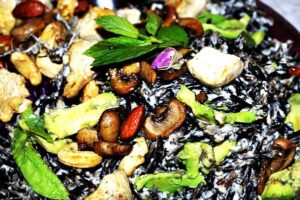
Source: http://tinyurl.com/yhea8nb